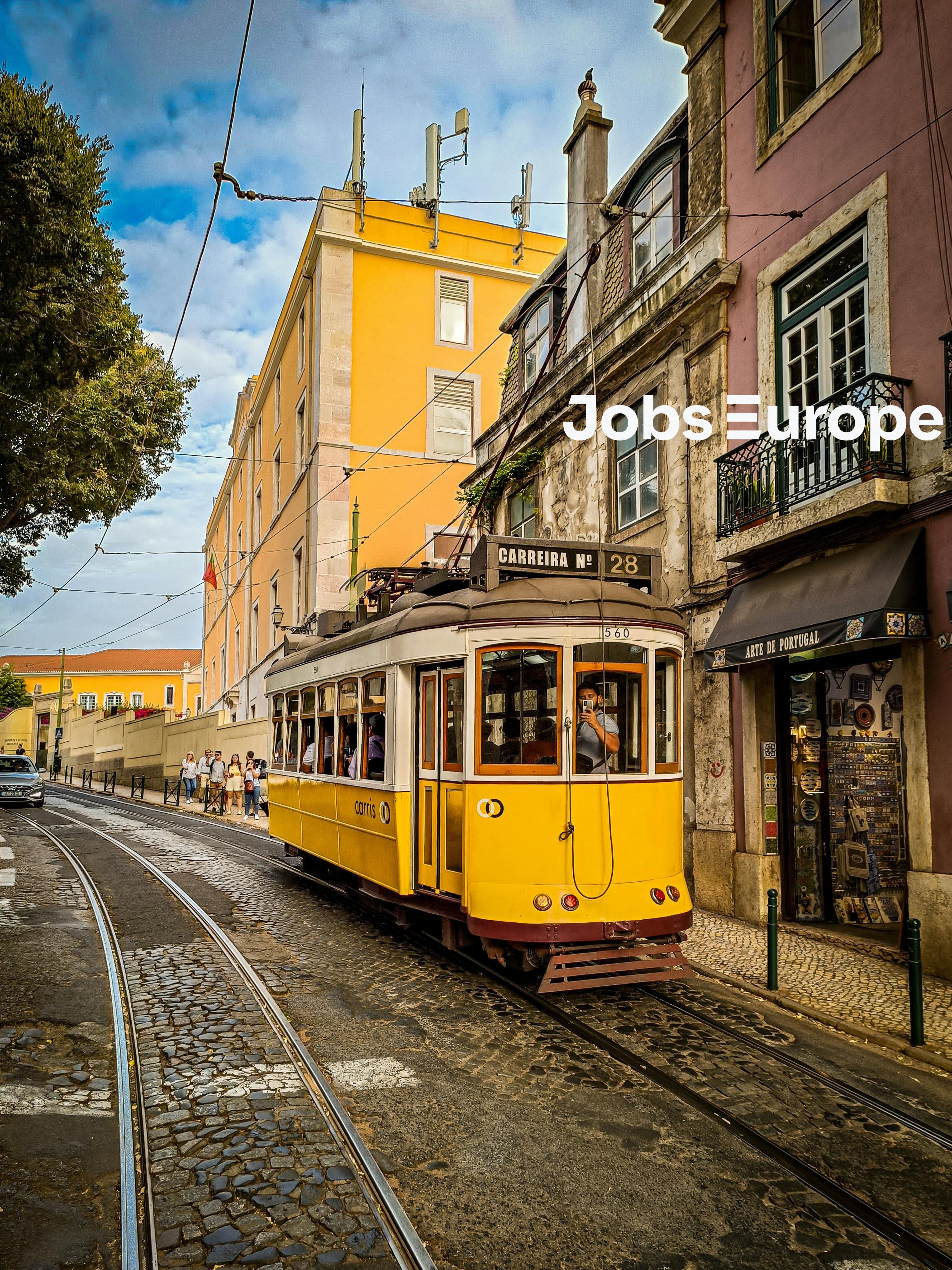
Moving from Germany to Portugal for Work (2026 Guide)
Learn how to relocate from Germany to Portugal for work, including jobs, salaries, housing, taxes, and registration requirements for EU citizens.
Portugal has become one of Europe’s most attractive destinations for workers looking for lower living costs, better weather, and a more relaxed lifestyle. For German citizens, relocating to Portugal is relatively straightforward thanks to EU freedom of movement, but there are still important legal, financial, and practical steps to understand before making the move.
Whether you are relocating for a career change, remote work, or a better quality of life, this guide covers everything you need to know.
Start by exploring Portugal job opportunities or browse our European relocation guides for more country-to-country advice.
Can German Citizens Move to Portugal Freely?
As both countries are members of the European Union, German citizens have the legal right to live and work in Portugal without needing a visa or work permit.
However, there are still administrative requirements to complete.
After arriving in Portugal, you will usually need to:
Apply for a Portuguese tax number (NIF)
Register your residency in Portugal if staying long-term
Register for social security if employed
Register for healthcare access
For official guidance on moving and working in another EU country, visit: Your Europe – Working abroad in the EU
For Portuguese administrative procedures: ePortugal Portal
How to Find a Job in Portugal Before Moving
One of the best ways to make your relocation smoother is to secure work before arriving.
Portugal’s job market continues to grow, especially in:
Technology
Tourism
Customer support
Shared service centers
Startups
International sales
German-speaking professionals are highly valued in customer support and multilingual service roles, particularly in larger cities.
The best cities for job opportunities in Portugal include:
Lisbon
Porto
Braga
Germany vs Portugal Salary Comparison
Understanding salary expectations is one of the most important parts of planning your move.
Germany generally offers higher average salaries than Portugal, but Portugal often has lower living expenses—especially for housing, transport, and dining.
Key differences:
Germany
Higher wages
Higher taxes
Higher rent
Strong employee protections
Portugal
Lower wages
Lower rent
Lower everyday costs
Better climate and work-life balance
Before making your move, compare your expected income with living costs using:
Numbeo Cost of Living Calculator
Finding Housing in Portugal
Portugal’s housing market can be competitive, especially in Lisbon and Porto.
Things you should prepare for:
1–2 months deposit
Proof of income
Employment contract
Identification documents
Popular housing platforms include: Idealista Portugal, OLX.pt, Imovirtual
Smaller cities like Braga can offer significantly lower rents and a quieter lifestyle.
Taxes and Healthcare in Portugal
If you spend more than 183 days in Portugal during the tax year, you will generally become a Portuguese tax resident.
This affects:
Income tax obligations
Social security contributions
Tax reporting requirements
Official tax information is available here: Portuguese Tax Authority
Healthcare access is generally linked to employment status and residency registration. Learn more here about Healthcare in Portugal for EU Citizens.
It’s important to understand your tax and healthcare obligations before relocating.
Best Portuguese Cities for Expats
Lisbon
Best for:
Tech jobs
Startups
International companies
Lisbon has become one of Europe’s fastest-growing startup hubs and attracts workers from across the continent.
Porto
Best for:
Lower living costs than Lisbon
Growing international businesses
Better work-life balance
Porto combines city opportunities with a more affordable lifestyle.
Braga
Best for:
Affordable housing
Emerging tech opportunities
Quieter living
Braga is becoming increasingly popular among professionals looking for lower costs.
Conclusion
Moving from Germany to Portugal can be an excellent choice if you’re looking for a lifestyle upgrade while remaining within the EU labour market.
The biggest challenge is often balancing lower salaries with lower living costs.
Planning ahead—especially with employment, housing, and taxes—can make your transition much smoother.
Frequently Asked Questions
Can German citizens work in Portugal without a visa?
Yes. As EU citizens, Germans can live and work in Portugal without needing a visa.
Do I need a Portuguese NIF?
Yes. A Portuguese tax number (NIF) is often required for taxes, renting, and opening a bank account.
Is Portugal cheaper than Germany?
In many cases, yes—especially for rent, transport, and daily expenses.
What are the best cities in Portugal for expats?
Popular choices include Lisbon, Porto, and Braga.
Can I move first and look for work later?
Yes, but securing a job before moving reduces financial pressure and makes finding housing easier.
Start your job search in Portugal today on Jobs Europe.
Learn how to relocate from the Netherlands to Spain for work, including jobs, salaries, housing, taxes, and registration requirements in 2026.
Relocating from the Netherlands to Spain (video guide) has become an increasingly popular option for workers looking for a better climate, lower living costs, and a different pace of life. For Dutch citizens, moving within the EU is relatively straightforward, but there are still important legal, financial, and practical steps to understand before making the move.
Whether you’re moving for a career change, remote work, or a fresh start, this guide covers everything you need to know.
Can Dutch Citizens Move to Spain Freely?
As both countries are part of the European Union, Dutch citizens have the right to live and work in Spain without needing a work visa.
However, there are still several administrative requirements.
After arriving in Spain, you’ll usually need to:
Register your address (empadronamiento)
Apply for a foreign identification number (NIE)
Register for social security if employed
Register for healthcare access
The EU’s official mobility portal explains these rights in detail: Your Europe – Working abroad in the EU
For Spanish immigration procedures: Spanish Migration Portal
How to Find a Job in Spain Before Moving
The smartest move is to secure a job in Spain before relocating.
Spain has strong demand in sectors like:
Tourism and hospitality
Technology
Customer support
Logistics
International sales
Dutch speakers are particularly valuable in customer support and tourism-focused roles.
Popular cities for finding job opportunities in Spain include:
Barcelona
Madrid
Valencia
Málaga
Salary Comparison: Netherlands vs Spain
One of the biggest factors when relocating is understanding salary expectations.
In general:
The Netherlands offers higher average salaries than Spain, but Spain often has lower living expenses, especially outside major cities.
Key differences:
Netherlands
Higher wages
Higher rent
Higher taxes
Strong employee protections
Spain
Lower wages
Lower housing costs
Lower daily expenses
Better weather and lifestyle balance
Before moving, compare your expected income with local costs using: Numbeo Cost of Living Calculator
Finding Housing in Spain
Finding housing in Spain can be competitive, especially in popular cities like Barcelona and Madrid.
Things to expect:
1–2 months deposit
Proof of income
Employment contract
Agency fees (sometimes)
Popular housing platforms you could use for finding rental properties locally in Spain include: Idealista Spain, Fotocasa, Pisos, Milanuncious or Habitaclia.
Smaller cities like Valencia and Málaga can offer better affordability compared to Barcelona.
Taxes and Healthcare in Spain
If you live in Spain for more than 183 days a year, you’ll generally become a Spanish tax resident.
This affects:
Income tax
Social contributions
Reporting obligations
Tax rules can vary depending on your work situation. Official Spanish tax information: Spanish Tax Agency
Healthcare access in Spain is usually available through social security registration if employed.
Best Spanish Cities for Expats
Barcelona
Best for:
International jobs
Startups
Tech
Madrid
Best for:
Corporate jobs
Finance
Large employers
Valencia
Best for:
Lower cost of living
Better work-life balance
Málaga
Best for:
Remote workers
Tourism jobs
Lifestyle
Conclusion
Moving from the Netherlands to Spain can be an excellent choice if you’re looking for a lifestyle upgrade while staying within the EU labor market.
The biggest challenge is often balancing lower salaries against lower living costs. Planning ahead—especially with housing and employment—can make the transition much smoother.
Start your job search in Spain today on Jobs Europe.
Frequently Asked Questions
Can Dutch citizens work in Spain without a visa?
Yes. As EU citizens, Dutch nationals can live and work in Spain without a visa, but they may need to complete local registration.
Do I need an NIE to work in Spain?
Yes. The NIE is commonly required for employment, taxes, and opening a bank account.
Is Spain cheaper than the Netherlands?
In many cases, yes—especially for rent, dining, and transportation.
What are the best cities in Spain for expats?
Popular choices include Barcelona, Madrid, Valencia, and Málaga.
Can I move first and look for work later?
Yes, but securing work before moving reduces financial pressure and makes renting easier.
Remote work in Europe continues to expand rapidly in 2026, offering access to international employers, flexible working arrangements, and new visa pathways for global professionals. Most opportunities are concentrated in tech, customer support, marketing, and digital services, with salaries ranging widely depending on experience and location. Digital nomad and remote work visas are now available in multiple European countries, making relocation easier than ever for qualified candidates.
Remote Jobs in Europe: What It Means in 2026
Remote jobs in Europe allow professionals to work from anywhere while being employed by companies based in the EU or outside of it. In 2026, remote work has become a standard hiring model rather than an exception, especially in international and digital-first industries.
There are three main types of remote work arrangements in Europe:
Fully remote roles allow employees to work entirely outside of an office, often from any European country. For example, a software engineer employed by a Dutch company but living in Portugal.
Hybrid roles combine office attendance with remote work, typically requiring occasional presence in cities such as Berlin, Amsterdam, or Paris.
Remote-first companies are structured around distributed teams, where physical offices are optional rather than required.
Types of Remote Employment in Europe
Understanding employment models is essential when applying for remote jobs in Europe.
Employees are hired directly under local labor laws with full benefits, payroll, and protections.
Contractors operate independently, usually responsible for their own taxes and insurance.
Freelancers work with multiple clients and often manage cross-border tax obligations depending on their country of residence.
Best Countries for Remote Jobs in Europe
Europe offers a wide range of remote-friendly destinations, each with unique advantages.
Western and Northern Europe such as Germany, the Netherlands, and the Nordics provide strong digital infrastructure, stable economies, and high demand for skilled professionals.
Central and Eastern Europe including Poland, Hungary, and the Baltic states offer lower living costs and growing tech ecosystems. Estonia is particularly known for its digital-first governance and e-residency system.
Southern Europe including Spain and Portugal has become a global hub for remote workers due to lifestyle appeal, coworking infrastructure, and digital nomad visa programs.
Digital Nomad and Remote Work Visas in Europe
Several European countries now offer dedicated visas for remote workers, allowing non-residents to legally live in Europe while working for foreign employers.
Countries such as Croatia, Portugal, Estonia, Spain, Hungary, and Iceland offer variations of digital nomad or remote work visas.
Typical requirements include:
Proof of stable remote income (usually €2,500–€3,500+ per month)
Valid health insurance
Proof of employment or freelance contracts
Accommodation details
Most visas are valid for 6–12 months, with some allowing renewal or transition into longer-term residence.
Industries Offering Remote Jobs in Europe
Remote opportunities are expanding across multiple sectors:
Technology and engineering roles such as developers, DevOps engineers, and data scientists remain the largest segment.
Customer experience and support roles are widely offered by international companies hiring multilingual talent.
Marketing, content, and SEO positions are increasingly remote-first across European startups and agencies.
Product, design, and UX roles are highly remote-friendly in global tech companies.
Finance, HR, and operations roles are also growing in distributed organisations.
Salaries and Working Conditions for Remote Jobs in Europe
Remote salaries vary depending on industry, experience, and employer location.
Typical annual ranges include:
Tech roles: €45,000–€120,000+
Product roles: €50,000–€100,000
Marketing and content: €35,000–€80,000
Customer support: €25,000–€50,000
Remote workers in Europe often receive additional benefits such as home office stipends, private healthcare, flexible schedules, and stock options in tech companies.
How to Find Remote Jobs in Europe
Finding remote work opportunities requires a focused approach.
Candidates should:
Use remote job boards specialising in European roles
Search with keywords like “remote Europe”, “EU time zone”, or “remote Germany”
Optimise CVs for remote work experience and digital collaboration tools
Highlight language skills and time zone availability clearly
Strong applications typically demonstrate remote communication skills, self-management ability, and experience working in distributed teams.
Preparing for Remote Work in Europe
A successful remote setup requires both technical and legal preparation.
Professionals should ensure:
Stable high-speed internet (100 Mbps or higher recommended)
Ergonomic home office setup
Clear understanding of tax residency rules
Proper classification (employee, contractor, or freelancer)
Remote workers must also understand local legal obligations if staying long-term in a European country.
Compliance, Tax, and GDPR Considerations
Remote work across borders in Europe requires careful attention to legal compliance in the EU.
Key considerations include:
Tax residency rules, which may change depending on length of stay
Proper classification of employment contracts
GDPR compliance when handling personal data
Social security and healthcare obligations in the country of residence
It is strongly recommended to consult legal or tax professionals for individual cases.
Step-by-Step Guide to Getting a Remote Job in Europe
To increase success rates, job seekers should follow a structured approach:
First, assess remote readiness by ensuring strong communication skills and digital collaboration experience.
Next, research visa and legal requirements for your target countries.
Then, optimise your CV for remote roles, highlighting tools such as Slack, Zoom, or project management platforms.
After that, apply strategically using remote-focused job platforms and tailored applications.
Finally, prepare thoroughly for virtual interviews and clarify salary, benefits, and relocation support.
Frequently Asked Questions
What are remote jobs in Europe in 2026?
Remote jobs allow professionals to work from anywhere in Europe or globally while being employed by companies based in or outside Europe.
Can I work remotely in Europe as a non-EU citizen?
Yes, in many cases through digital nomad or remote work visas, depending on the country.
Which countries in Europe are best for remote work?
Germany, the Netherlands, Portugal, Spain, Estonia, and the Nordics are among the most remote-friendly.
Do remote jobs in Europe pay local or global salaries?
It depends on the employer. Some companies use location-based pay, while others offer standardised global salaries.
What jobs are most common for remote work in Europe?
Tech, marketing, customer support, design, finance, and operations roles are most common.
Where to Go Next
Remote work in Europe continues to expand, creating opportunities for professionals across industries and skill levels. Staying updated on hiring trends, visa changes, and employer requirements will significantly improve your chances of success.
Job seekers can explore remote opportunities across Europe and apply to roles suited to their skills, while employers can leverage modern recruitment tools to access international talent more efficiently.
How to get a work visa in Europe, understand sponsorship requirements, and find employers hiring international talent.
Europe remains one of the world’s strongest destinations for skilled international professionals, with growing demand across technology, engineering, healthcare, finance, customer support, and digital services.
For most non-EU professionals, working in Europe requires a valid work visa or residence permit. The process varies by country, job type, qualifications, and salary level — but understanding your options early can significantly improve your chances of securing a role and relocating successfully.
This guide explains the main work visa routes in Europe, eligibility requirements, country-specific pathways, employer sponsorship strategies, and the steps you’ll need to complete before and after arriving.
If you're actively looking for employers open to international hiring, Jobs Europe helps candidates find jobs that include visa sponsorship and relocation support.
Who Needs a Work Visa in Europe?
If you are not a citizen of the EU, EEA, or Switzerland, you will usually need a work visa or permit to legally work in Europe.
This applies to most professionals from countries outside Europe, including:
Asia
Africa
North America
South America
The Middle East
Citizens of United Kingdom also now follow standard third-country immigration rules after Brexit.
Short-term business visits for meetings, conferences, or training may not require a work permit, but long-term employment, relocation, and locally contracted remote work typically do.
Main Types of Work Visas in Europe
European countries offer several visa routes for international professionals.
EU Blue Card
The EU Blue Card is one of the most popular options for highly skilled professionals.
It is designed for workers with:
Higher education qualifications
Recognized professional experience
A valid job offer meeting salary thresholds
Main benefits:
Path to permanent residency
Family reunification
Better mobility across EU countries
Best suited for:
Software engineers
IT specialists
Engineers
Healthcare professionals
National Skilled Worker Visas
Many countries offer their own national skilled worker permits.
Examples include:
Germany Skilled Worker Visa
Netherlands Highly Skilled Migrant Permit
France Talent Passport
These often cover both university graduates and vocational professionals.
Best for:
Skilled trades
Customer support professionals
Project managers
Business professionals
Intra-Company Transfer (ICT)
For employees transferring from a non-EU office to a European office within the same company.
Usually used for:
Managers
Specialists
Senior technical staff
Best for multinational company employees.
Startup and Entrepreneur Visas
Available for founders launching businesses in Europe.
Usually requires:
Business plan
Financial resources
Innovation potential
Popular destinations include:
Estonia
France
Netherlands
Graduate Job Search Visas
Many European countries allow international graduates to stay after university and search for work.
These usually last between 6–18 months. Ideal for students transitioning into full-time employment.
Basic Requirements for a European Work Visa
Requirements vary by country, but most applications require:
A valid job offer from a European employer
Relevant qualifications or training
Professional work experience
Valid passport
Health insurance
Criminal record certificate
Proof of accommodation
Salary meeting visa requirements
Some regulated professions (especially healthcare and legal roles) may require qualification recognition before applying.
Required Documents
Prepare these before applying:
Signed employment contract
Updated CV/resume
Degree certificates
Professional references
Passport copies
Criminal record certificate
Health insurance documents
Passport photos
Proof of accommodation
Visa application form
Fee payment receipt
Important: Some embassies require notarized or translated documents. Always check official government immigration websites before submitting. Need help tailoring your Europass CV? Learn here using our top 10 tips on how to write an effective European CV.
Best European Countries for Work Visa Sponsorship
Some countries are more accessible for international professionals.
Germany
Germany remains one of Europe’s strongest destinations for skilled migration.
Strong sectors:
Engineering
Software development
Healthcare
Manufacturing
Popular visas:
EU Blue Card
Skilled Worker Visa
Germany is especially attractive because of high demand and structured immigration pathways. Find jobs in Germany here
Netherlands
The Netherlands has strong demand for:
Tech talent
Finance professionals
Operations specialists
The Highly Skilled Migrant route is one of Europe’s most efficient. Explore job openings in the Netherlands here.
France
France offers strong job opportunities through:
Talent Passport
EU Blue Card
Startup visas
High-demand sectors include:
Engineering
Science
Research
Creative industries
Estonia
Estonia is highly attractive for digital professionals.
Strong sectors:
SaaS
Customer support
IT
Startups
Its digital-first systems simplify immigration and onboarding.
How to Apply for a Work Visa in Europe
1. Secure a Job Offer
Your first step is finding an employer willing to sponsor international candidates.
Look for jobs mentioning:
Visa sponsorship
Relocation support
International hiring
Jobs Europe helps identify these opportunities more easily.
2. Prepare Your Documents
Gather all required documentation in advance.
Missing documents are one of the most common reasons for delays.
3. Employer Starts Sponsorship Process
In many countries, employers must begin the permit process before you apply.
This may include labor market approval.
4. Submit Your Application
Apply through:
Embassy
Consulate
Official immigration portal
Follow country-specific requirements carefully.
5. Attend Biometrics or Interviews
Some countries require:
Fingerprints
Identity verification
Interviews
Prepare accordingly.
6. Wait for Approval
Processing times vary.
Typical timelines:
4–8 weeks for simpler cases
2–4 months for complex applications
How to Find Employers That Sponsor Work Visas
Finding the right employer is often the biggest challenge.
Focus on:
Specialized job boards
Use platforms like Jobs Europe, relocate.me, LinkedIn, EURES, Xing, Werk.nl, Pole-Emploi, CVKeskus.ee - Estonia to find employers hiring internationally.
Prioritize listings mentioning:
Visa sponsorship jobs
Relocation support
International onboarding
Shortage occupations
Target sectors with labor shortages:
Technology
Healthcare
Engineering
Customer service
These sectors are more likely to sponsor.
Networking
Attend:
Online career fairs
Industry webinars
Alumni networking events
Many sponsorship opportunities come through referrals.
Common Reasons Work Visa Applications Get Rejected
Understanding common rejection reasons helps you avoid mistakes.
Main reasons include:
Incomplete documentation
Salary below visa thresholds
Unrecognized qualifications
Employer sponsorship issues
Incorrect application forms
Missing translations
Insufficient financial proof
Double-check everything before submission.
What to Do After Arriving in Europe
After arrival, complete these tasks quickly:
Register your address
Many countries require local registration within days.
Open a bank account
Needed for salary payments.
Set up healthcare
Health insurance is often mandatory.
Register for tax and social security
This ensures legal payroll and benefits access.
Review your employment rights
Understand:
Working hours
Paid leave
Notice periods
Overtime policies
Knowing your rights protects you.
Frequently Asked Questions
Can I move to Europe without a job offer?
Usually no. Most work visas require a job offer first, except for startup or graduate job search visas.
What is the easiest country in Europe for work visas?
Germany, Estonia, and the Netherlands are among the most accessible for skilled workers.
Can I switch employers?
It depends on the visa. Some permits are employer-specific. The EU Blue Card offers more flexibility.
Can my family join me?
In many cases, yes. Family reunification is available under many visa types.
How long does processing take?
Anywhere from four weeks to several months depending on country and visa category.
Final Thoughts
Europe continues to welcome skilled international talent across multiple industries.
For non-EU professionals, success depends on:
Choosing the right visa route
Finding sponsorship-friendly employers
Preparing documents carefully
Following country-specific legal requirements
Work visa rules can change quickly, so always verify details through official government immigration channels before applying.
If you're ready to explore opportunities, start by finding employers actively hiring international professionals and offering visa sponsorship through Jobs Europe.
Your next career move in Europe may be closer than you think.
Expanding a business in Europe means engaging with a continent of incredible linguistic diversity. With more than 200 languages spoken across the region, the ability to recruit, support, and retain multilingual professionals is vital for companies targeting growth, cross-border collaboration, and customer excellence. Multilingual employees bring essential skills to jobs in IT, customer experience, finance, sales, and digital services, helping companies build bridges between markets while nurturing local and global relationships.
Yet, attracting and keeping top-tier multilingual talent comes with its own challenges. Employers face tight competition for skilled candidates, diverse regulatory frameworks including GDPR, and evolving expectations around culture, relocation, and fairness. Successfully assembling a diverse, high-performing team requires thoughtful, practical strategies - grounded in clarity, inclusivity, transparency, and compliance.
This comprehensive guide offers actionable steps, best practices, and tools for employers and recruitment professionals in Europe to stand out and build a strong, multilingual workforce.
Informational Note: The information provided here is for general guidance only. For specific situations involving labour law, immigration, or personal data protection, always consult a qualified HR or legal professional.
Why Multilingual Talent Matters in Europe
The European market’s depth and variety create special demand for talent fluent in multiple languages. Recent trends make this skill set more critical than ever:
Strong market demand: Customer service, finance, sales, software, and digital marketing roles often prioritize English speakers who also know German, Dutch, French, Spanish, or Nordic languages.
Growth sectors: E-commerce, fintech, and remote services increasingly rely on teams who can switch languages to reach clients and users from many countries.
Business expansion: Companies looking to expand across borders need staff who can interact seamlessly with partners and customers in multiple languages.
Diversity and inclusion: Multilingual teams foster broad perspectives, creative problem solving, and better local insights - key for innovation and customer loyalty.
However, the search for skilled multilingual candidates can be complex:
Intense competition: Major hubs like Berlin, Amsterdam, Lisbon, Barcelona, and Krakow draw talent from across the globe, but demand is high - especially for niche combinations (such as German-Dutch or Scandinavian-French).
Talent supply challenges: Economic shifts, remote work expansion, and fluctuating migration patterns affect where talent chooses to settle and which languages are in greatest demand.
Recruitment complexity: Employers need to navigate labour law, relocation logistics, data privacy (notably GDPR), and a patchwork of regulations that shape recruitment and employment.
Despite these hurdles, well-prepared employers can tap a rich pool of professionals to drive sustainable growth and customer engagement.
Crafting Inclusive Job Postings
Success in multilingual recruitment starts with the job descriptions you publish. Transparent, well-designed postings attract the right candidates while promoting your employer brand.
Tailoring Descriptions to Highlight Language Skills and Cultural Fit
List languages precisely: Specify each language required or preferred, plus desired proficiency level (e.g., “Fluent French and English, B2 level minimum in German”).
Reflect cultural openness: Describe your team’s international composition, collaboration style, and cultural events to reassure candidates of a welcoming environment.
Avoid region-specific jargon: Use clear, straightforward language. Minimize terms that may not translate or resonate with non-native speakers.
Emphasize performance over native status: Avoid “native speaker only” requests unless absolutely essential. Focus instead on job-relevant ability.
Clear Communication of Relocation Support and Benefits
Relocation and onboarding: Indicate what assistance is available (such as visa support, housing, registration help, or language classes).
Work mode and flexibility: Be explicit about remote, hybrid, and in-office options, plus any support for flexible schedules.
Benefits for internationals: Highlight anything tailored for newcomers (banking help, translation support, local orientation).
Transparency: Always share job location, reporting structure, and contract details up front.
Checklist for Optimizing Multilingual Job Postings:
[ ] State every required and preferred language, with proficiency expectations
[ ] Outline relocation and onboarding support (visa, housing, settling-in guidance)
[ ] Present company values and efforts toward inclusivity
[ ] Specify job location, hybrid or remote availability
[ ] Avoid references to nationality or personal status unrelated to essential job functions
[ ] Use simple, readable English (or the working language)
[ ] Highlight international team stories, employee testimonials, or diversity recognitions
[ ] Clearly state application procedures and required documents
Sourcing and Outreach Strategies
A good job description is only effective when it reaches qualified multilingual candidates. Proactive sourcing and outreach open access to hidden talent pools and build your company’s reputation among international professionals.
Using Specialized Multilingual Job Boards and Digital Platforms
Multilingual job boards: Choose platforms that focus specifically on language talent, offering options to post in different languages and promote jobs across multiple European countries. Subscription-based platforms with unlimited job postings offer flexibility and cost efficiency for campaigns across regions.
Targeted campaigns: Use platform tools to run sponsored listings or email promotions aimed at speakers of specific languages or those with desired cultural backgrounds.
Candidate management tools: Leverage dashboards tracking applications, engagement rates, and source analytics to identify which approaches yield the best results.
Leveraging Social Media, Employee Referrals, and Employer Branding
Employee referrals: Motivate your current multilingual staff to refer friends or ex-colleagues. Genuine recommendations tap into trusted networks and increase retention.
Social recruiting: Post open roles in language-specific groups on LinkedIn, Facebook, and professional forums. Use location and industry hashtags to boost visibility.
Build employer branding: Company pages and tailored messaging set you apart in attracting talent. Showcase your story, highlight existing multicultural teams, and share staff experiences.
Employer profiles: To see how leaders in Europe present themselves, explore Discover companies hiring multilingual talent.
EU Talent Partnerships and Funded Initiatives
EU Talent Partnerships: Several European countries participate in skills-matching programs that connect companies with jobseekers from third countries, prioritizing high-demand sectors.
Government tax incentives: Some locations offer reduced tax rates or bonuses for employers who hire international or highly skilled professionals (eligibility varies).
National relocation initiatives: Certain governments contribute to moving costs or provide special integration support, especially in IT, healthcare, and STEM fields.
Comparison Table: Multilingual Talent Attraction Methods
MethodProsConsExample PracticesSpecialized Job BoardsDirect access to language-skilled candidates, analyticsSubscription or post feesUnlimited postings, targeted campaigns on multilingual platformsEmployee ReferralsTrusted source, community feel, cost-effectiveVolume can be low in early-stage hiringReferral bonuses, recognition at international companiesEmployer BrandingAttracts passive candidates, builds market trustRequires ongoing investmentDedicated company pages, staff testimonialsSocial Media CampaignsImmediate reach, supports cultural fitRequires regular managementLanguage-specific LinkedIn/Facebook group postingsEU Talent InitiativesFunds and legal support, fills skills gapsApplication can be complex, slowTalent Partnerships for STEM and healthcare recruitmentNational Incentive ProgramsPotential tax savings or grantsTerms vary, check requirementsFlat-rate tax schemes, relocation grants by country government
Explore all features for hiring multilingual professionals - unlimited job postings, targeted outreach, and candidate management - by visiting the Jobs Europe recruitment products.
Enhancing Candidate Experience
Attracting skilled candidates is just the beginning. A seamless, transparent, and supportive recruitment process builds your company’s reputation and increases acceptance rates.
Providing Relocation Assistance and Competitive Compensation Packages
Relocation packages: Offer step-by-step guidance, from visa sponsorship and housing search to opening a bank account and finding schools.
Cost-of-living support: Share detailed information on local expenses. Consider stipends, initial housing, or extra leave for settling in.
Accessible support: Assign a bilingual recruiter or onboarding mentor to answer questions in the candidate’s preferred language.
Salary transparency: Align compensation with local benchmarks and highlight bonuses or allowances for language proficiency.
Conducting Practical and Fair Language Assessments
Job-relevant assessment: Replace generic language exams with exercises closely related to actual work tasks - like drafting an email, simulating a client chat, or presenting a short project pitch.
Fairness: Avoid questions that test cultural references unfamiliar to outsiders. Recognize and celebrate diverse accents and dialects.
Data protection: Ensure candidate data collected during assessment is kept confidential and processed under GDPR standards.
Best Practices for Candidate Experience:
Communicate next steps clearly and promptly in the candidate’s preferred language whenever possible
Provide transparent timelines for the entire recruitment process
Minimize repetitive interviews and unnecessary assessments - focus on essentials
Send detailed onboarding packs covering workplace culture, local practicalities, and legal requirements
Use an applicant tracking system (ATS) for application updates and streamlined feedback
Protect candidate personal information and explain privacy policies throughout the process
A platform with direct ATS integrations with Jobs Europe will make tracking, communication, and onboarding much easier for both recruiters and candidates.
Looking to support your international hires further? Explore career advice and relocation tips, which include practical guidance on moving, adapting to European work environments, and tackling everyday relocation hurdles.
Retention Best Practices
Great hiring is only the start - multilingual professionals are more likely to stay and advance when companies foster a supportive, growth-minded environment.
Creating Inclusive Work Environments and Cultural Training
Cultural awareness: Implement regular workshops and events that acknowledge traditions, holidays, and communication styles across cultures.
Leadership and mentor programs: Pair new international hires with mentors who share linguistic or cultural backgrounds, aiding smoother transition into the company.
Diversity communication: Celebrate staff achievements related to language, collaboration, or cross-border success stories.
Offering Career Advancement and Professional Development Programs
Language and skills training: Subsidize additional language courses, upskilling, or technical certifications.
Internal mobility: Encourage movement between departments and regions, giving multilingual talent opportunities to expand their impact.
Transparent progression: Clearly communicate paths for advancement, including international assignments, leadership tracks, and specialized projects.
Community engagement: Support membership in professional/language groups and offer opportunities to attend conferences or events.
Examples of Effective Retention Approaches:
Holding regular team meetups focused on culture and language exchange
Offering remote and hybrid flexibility for staff based in major European cities
Dedicated budget for training, workshops, and professional association memberships
Compliance Reminder: Always structure progression, benefits, and professional development according to fair labor practices, privacy laws, and documented company policy.
For more resources on building long-term satisfaction and professional growth, direct your team to Explore career advice and relocation tips.
Common Pitfalls to Avoid
Even experienced employers sometimes overlook key legal and practical risks. Avoid these pitfalls in your multilingual recruitment:
Discriminatory language: Never state age, gender, nationality, or “native-only” requirements unless strictly job-related and legally allowed. Use only skill-based criteria.
Unrealistic candidate profiles: Overly strict requirements (e.g., seeking “native-level fluency in five languages plus five years’ experience”) can significantly shrink your talent pool.
GDPR and privacy violations: Collect only essential information; always secure consent and explain how data will be used and stored.
Unstructured assessments: Informal language tests may introduce bias or disadvantage otherwise strong candidates.
Vague relocation promises: Make sure any support or benefits are defined, documented, and delivered transparently.
Uphold fairness and compliance at every step to ensure a good reputation - both among talent and regulatory bodies.
Bringing It All Together: Take Action
Attracting and retaining multilingual talent throughout Europe takes organization, empathy, and the right mix of digital solutions. Start with clear, inclusive postings, use platforms designed for international hiring, create a welcoming selection process, and support long-term development and well-being.
Employers:
Use a trusted subscription-based platform to post unlimited jobs, reach multilingual candidates, and run targeted campaigns.
Build employer branding by creating an attractive company page and highlighting diversity and growth stories.
Integrate digital tools for candidate management, onboarding, and GDPR compliance.
Provide relocation support, transparent offers, and professional development so new hires settle in and grow with your company.
Explore all the solutions available for sourcing and managing talent at Jobs Europe recruitment products.
Candidates:
Looking for career opportunities across Europe?
Create a candidate profile on Jobs Europe to be matched with relevant jobs, receive personalised alerts, and access support for your move and professional journey.
For guidance on job search, moving to a new country, and workplace integration, Explore career advice and relocation tips.
Both employers and candidates can help build a diverse, global workforce - one that benefits businesses, individuals, and communities across Europe.
Frequently Asked Questions
What types of jobs best suit multilingual professionals in Europe?
Customer service, IT, sales, marketing, finance, hospitality, and localization roles often require knowledge of two or more European languages. Remote and hybrid positions are increasingly common, especially in tech and digital services.
Is local language fluency always necessary?
Not for every role. Many jobs prioritise English with an additional European language (like German, Dutch, or Spanish). Some roles only require conversational proficiency; others demand strong formal ability.
Can employers find third-country talent using digital platforms?
Yes. Employers can advertise internationally on specialised multilingual boards, employ targeted campaigns, and join EU Talent Partnerships to access skilled candidates from both inside and outside the EU. Employer branding helps attract candidates by demonstrating cultural support and professional opportunities.
What should a competitive relocation package include?
Moving assistance, initial housing support, clear onboarding processes, and help with paperwork and bank registration all attract top talent. Having a single point of contact for relocation and regular check-ins helps new hires transition smoothly.
How can companies assess language skills fairly?
Assign job-relevant tasks: sample customer calls, real-time chats, or document preparation are better than generic grammar tests. Reflect realistic scenarios, remain inclusive of different dialects and accents, and avoid culturally biased questions.
How do EU or national initiatives support international hiring?
EU Talent Partnerships and some government incentive programs offer funding, legal support, and tax benefits for hiring third-country professionals. Requirements and eligibility vary, so verify with local experts before applying.
What are common mistakes in multilingual recruitment?
Using restrictive language in postings, searching for impossible skill combinations, neglecting privacy regulations, or communicating slowly and ambiguously during hiring. Structured, fair processes and prompt feedback yield better results.
What keeps multilingual employees engaged and retained?
An inclusive work culture, opportunities for advancement, ongoing training, language development, and recognition of each employee’s contribution.
Which European cities draw the most multilingual remote workers?
Cities such as Berlin, Amsterdam, Barcelona, Krakow, and Lisbon offer dynamic job markets, excellent quality of life, and international communities attractive to language specialists.
Can tax incentives support multilingual recruitment?
Yes, but country rules differ. Flat-rate tax schemes or bonuses sometimes apply to international hires; always check local law and consult an advisor for compliance.
By applying these practical strategies, you can build a dynamic multilingual team equipped for long-term success throughout Europe. Take the next steps to connect, recruit, and grow on a platform that understands the European market.
Maximizing a job search across multiple European countries opens up access to new career opportunities, improved work-life balance, and the chance to experience some of the world’s most vibrant cultures. European employers are actively looking for international talent, especially for multilingual, hybrid, and remote roles. However, fruitful job hunting in several countries requires more than sending the same CV to a range of employers. European job markets differ in skill demand, recruitment cycles, and legal requirements, which makes a strategic and targeted approach vital.
Many job seekers feel overwhelmed by large numbers of applications, confusing eligibility rules, and inconsistent employer responses. Differing languages, visa complexities, and automated resume screening systems add extra hurdles. By following a stepwise plan and making use of trusted recruitment tools and platforms, you can successfully connect with leading European companies and advance your career across borders. This guide provides actionable strategies, checklists, market insights, and compliance notes tailored to today’s European recruitment landscape.
Why Plan Your Job Search Across Multiple European Countries
A strategic job search across several European countries can expand your options and deliver unique rewards - but only if you plan ahead.
Advantages of a Multi-Country Search
Access to a broader pool of roles, including positions requiring specific skills or international backgrounds
Opportunities to match with employers looking for multilingual or culturally adaptable professionals
Ability to find countries that better support remote or hybrid work, or offer relocation and visa sponsorships
Recognizing Labor Market Differences
Job demand and sector growth vary by country: technology and engineering thrive in Germany, start-ups and tourism in Portugal and Spain, and finance in the UK
Language proficiency, communication styles, and workplace expectations differ: some regions prize directness, others place emphasis on formal documentation
Visa and work permit routes, salary levels, and openness to remote work are not uniform across the continent
Benefits of Targeted Applications
Tailored and localized applications stand out to employers, who receive a high volume of international interest
A clear focus improves both your efficiency and your chances of getting interviews and job offers
The Importance of a Consistent Narrative
Recruiters and automated tracking systems (ATS) prefer candidates with a clear story: why you want to work in a particular country, how your skills fit local needs, and whether you are genuinely ready to relocate or work remotely
Well-structured career stories foster trust and support later visa or relocation negotiations
Phase 1: Preparation and Self-Assessment
Preparation is the foundation for a successful cross-border job search. Detailed self-assessment enables you to focus, avoid wasted effort, and position yourself strongly with employers.
Clarify Your Value Proposition
Identify your main skills and how they answer needs in your target countries
Define your language capabilities and experience working in international teams
Create a narrative that explains your motivation for relocating or working across borders
Research Markets, Sectors, and Salaries
Choose 2–4 target countries where your profile aligns with local demand and sector growth
Examine salary ranges and cost of living for your roles in each country
Seek out industries open to international candidates and remote/hybrid roles
Visa and Relocation Considerations
Review visa sponsorship options: Does your target country offer employer sponsorship? Are there fast-track visas for shortage skills?
Favor employers and platforms with clear GDPR compliance and those mentioning relocation assistance
Check documentation needs: degree recognition, official translations, proof of funds or employment history
Document Your Eligibility and Choices
List your citizenship(s), existing permits, or evidence of willingness and eligibility to relocate
Collect digital copies (scanned and, if required, translated) of all key certificates and references
Checklist for Preparation:
[ ] Select 2–4 countries as application priorities
[ ] Articulate your international value proposition
[ ] Identify main employers and sectors in chosen countries
[ ] Review salary trends and growth prospects for your roles
[ ] Confirm your work permit and visa status
[ ] Gather translated certificates and proof of qualifications
Phase 2: Building Your Professional Presence
European recruiters often use digital platforms and ATS integrations to identify candidates, so building a strong and visible professional profile is essential.
Optimizing Online Profiles
Keep your LinkedIn and professional profiles current, with a professional photo and a headline noting your target countries or willingness to relocate
Use industry- and country-specific keywords that match the job descriptions you are targeting
List language proficiencies, relevant certifications, and key achievements at the top of your profile
Tailoring Resumes to Each Country and ATS
Adjust your resume format to meet country expectations (for example, Germany typically expects more detailed work history, while the UK prefers concise CVs)
Avoid graphics, tables, or unusual layouts - these can cause problems for ATS
Tailor your resume to each job and country, referencing your visa status or relocation willingness
Leveraging International Job Boards and Alerts
Set up targeted alerts on international job boards, filtering by job type, country, level, and remote or hybrid options
Job boards like Jobs Europe, Europe Language Jobs, Relocate Me, EURES offer access to millions of jobs and allow targeted searches across countries and sectors
Use Find Jobs in Europe on Jobs Europe to filter by your preferences and get alerts for relevant roles
Cross-Border Networking
Join professional networking groups focusing on your target countries and sectors
Participate in online events, industry webinars, and international career fairs
Research and connect with employers through their profiles and current openings using Explore Companies Hiring Across Europe
Profile and Networking Checklist:
[ ] Update LinkedIn with languages, relocation preference, and a headline that makes your international intent clear
[ ] Adjust resumes to each country’s style and ensure ATS compatibility
[ ] Register for job board alerts for selected markets
[ ] Join 2–3 sector-specific or regional networking groups
[ ] Create Your Candidate Profile on Jobs Europe to increase your reach with European recruiters
Phase 3: Streamlining Applications and Managing Workflow
Effectively managing applications is crucial when targeting multiple markets. Organization and personalized outreach are vital to keep opportunities moving forward.
Organizing and Tracking Applications
Use spreadsheets, job search tools, or recruitment tracking platforms to record applications, deadlines, responses, and follow-up dates
For each country, note needed documents, language requirements, and eligibility supporting paperwork
Mark which roles require customized cover letters and resumes
Preparing for Remote Interviews and Work
Ensure your device, internet connection, and environment are ready for video interviews
Understand each employer’s policy on hybrid or fully remote work, and clarify your readiness and expectations in applications
Prepare examples of working successfully with international and remote teams
Customizing Cover Letters and Communication
Write specific, personalized cover letters referencing the employer, unique role requirements, and your fit for both location and skill set
Mention visa, permit, or relocation readiness as appropriate for the role and country
Respond to employer messages promptly, confirming your interest and flexibility
Following Up and Professional Communication
Track all outreach and responses, setting reminders to follow up professionally after 1–2 weeks
Maintain a contact log for networking and reference purposes
Workflow Checklist:
[ ] Document all applications and follow-up dates in a tracker
[ ] Personalise cover letters and resumes for each application
[ ] Prepare thoroughly for remote interviews and clarify your remote-readiness
[ ] Stay organised with deadline reminders and consistent communication
Using Jobs Europe simplifies multi-country job search through designed for international candidates and employers.
Phase 4: Advanced Strategies and Timing Considerations
Go further in your job search by understanding local hiring trends, continuously building marketable skills, and maximizing your appeal as a European job candidate.
Understanding Hiring Seasonality and Regional Variation
Peak hiring for many sectors falls between March–May and September–November
Southern Europe often has a surge in tourism hires before summer, while tech and finance roles tend to be open year-round in Germany or the Netherlands
Target periods of high activity to increase chances of immediate interviews
Enhancing Soft Skills and Language Proficiency
Invest in language learning and internationally recognized certificates, especially if applying to markets where English is not the main language of business
Demonstrate soft skills prized in each country, such as teamwork, initiative, or adaptability, with examples on your CV and during interviews
Presenting Visa and Relocation Readiness
State visa/work permit status, relocation flexibility, and any previous international experience prominently on your CV and online profiles
Specify with phrases such as “EU citizen”, “Visa sponsorship required - immediately available to relocate subject to processing”, or “Currently authorized to work in Schengen countries”
Exploring Remote-First and Hybrid Roles
Target remote positions with European employers to start your cross-border career while you plan relocation logistics
Remote roles with relocation options after a probation period can be a practical early step
Country Comparison Table – Key Considerations
CountryTop IndustriesVisa ProcessRemote WorkLanguage NeedsGermanyTech, Engineering, FinanceModerateGrowingGerman helpful; English for techUKFinance, Tech, ServicesModerateHighEnglishSpainTourism, Tech, EnergyModerateModerateSpanish preferredPortugalTech, Tourism, StartupsHighVery HighEnglish fine in tech/startupsNetherlandsTech, Logistics, FinanceModerateVery HighEnglish widely used
Common Mistakes to Avoid in Multi-Country Job Searches
Indiscriminate Applications
Applying everywhere without targeting reduces the odds of success and may flag your profile as unfocused
Ignoring Local CV or Language Conventions
Neglecting country-specific formats, required details, or communication styles can lead to early rejection
Not Clarifying Visa or Work Permit Status
Employers need clarity on whether you require sponsorship, have work rights, or are relocated already
Forgetting GDPR and Data Compliance
Only submit personal details through secure, GDPR-compliant platforms; avoid sharing on unsecured systems
Failing to Assess Employer Support
Not all companies offer relocation, onboarding, or sponsorship benefits - research and prioritize those that do
Missing Out on Local Networks
Relying solely on online applications misses unadvertised opportunities accessed through referrals and professional contacts
Frequently Asked Questions
Should I apply across all Europe or select countries?
Focusing on 2–4 specific countries aligned with your skill set is more effective than a scattershot approach.
How can I check if my skills fit the target market?
Analyze job adverts, employer profiles, read Career Advice and Insights Articles, and connect with professionals in your field.
What are the fastest ways to get hired when relocating to Europe?
Securing a remote or hybrid position as a first step can speed up the process, allowing work from abroad while preparing for a move.
Are language skills essential for European jobs?
This varies by country and sector. English is sufficient for many tech or international roles, but customer-facing and public sector jobs often require fluency in the local language.
How should I display visa and relocation status on my application?
Clearly state citizenship, permit status, and openness to relocate at the top of your CV or profile.
When is the best time to job hunt in Europe?
Typically, March–May and September–November are busiest, but sectoral variations exist - research the cycle for your industry and target country.
How do I network effectively if I don’t live locally?
Build an active online presence, join relevant professional groups, and participate in virtual job fairs and networking events.
Should resumes be adapted for each country?
Yes - format, content length, and certain details differ by country. Maintain consistent achievements and a clear narrative.
What tips help with ATS systems?
Use clear formatting, repeat keywords from job listings, include all certifications, and list skills clearly for better screening results.
Is it advisable to relocate before securing an offer?
Most candidates are advised to secure remote or hybrid work first, especially if they require a visa or relocation package.
Real candidate story: Melanie, a marketing manager from France, chose to target Portugal and Germany with carefully adapted profiles and applications. By emphasizing language diversity and remote-work skills, she received an offer from an international employer that included a relocation package.
Compliance and Data Privacy Note: All references to candidate data, job applications, and personal information in this guide follow GDPR requirements. For visa, contract, or tax issues, consult an accredited professional for advice.
By customizing your job search, building a professional presence, and aligning your readiness for relocation or remote work, you can confidently step into Europe’s thriving job markets. With clear planning and the help of trusted recruitment tools, your next career move in Europe is within reach.